Thursday, September 10, 2009

Measly Humans


Eden and I were sitting around the other day watching a documentary on orangutans. As the badass creatures were swinging from trees, it got me thinking. A human would have to work for years to be able to do any of the crazy stuff these guys were doing. And every one of them can do it. One of the orangutans slipped and fell but caught a branch before any injury could occur, yet a human would have certainly fallen to their death.


So why do we have this superiority complex when it comes to our species. Sure, we can build and create things on a much more expansive scale than any other species, but we also destroy things on an even bigger scale. I'm just gobsmacked sometimes when I see another animal doing things that I'd love to do.


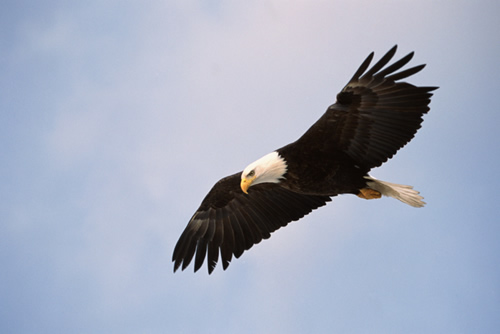
A fish can swim faster and stay underwater longer than any human.


So we build flippers and scuba tanks.


We see a bird can fly.


So we spend centuries trying and failing to fly.


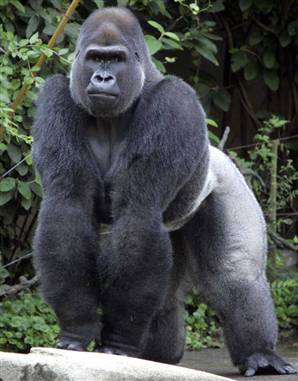
There are many animals that could beat the living shit out of us in a second.

Like this guy.

Or...
AAARGH.
And especially...

We are not the strongest or fastest. We may have the ability to outsmart any animal but we seem to live a less peaceful existence than any.

It's humbling. I'm not putting down human achievement but respect must be paid since a lot of our achievements are based upon replicating what other animals can already do.

Next time I see another animal, I'm going to marvel at how much cooler it is than me.


- Lee (while thinking about my dog Hulk)

Wednesday, September 9, 2009

Taking Risks

"Take a ch-ch-ch-chance"
- The Beatles

(<-- I took a risk and shaved my head in Sudamerica. Not sure if this one paid off...)


This is kinda like a part 2 to what I posted last week. Again I came up with this one while travelling. It was sort of a natural process to start taking more risks just because of the freedom that travelling provides. At first these were just small decisions like when it came to eating I wouldn’t turn down any food no matter how exotic. This immediately paid dividends as now I enjoy a much larger range of food than I used to.

I started to make decisions like this more often. Instead of safe, expensive flights between cities, I started choosing the cheap and rickety buses. This was also a money based choice and I figured it wasn’t going to hurt anybody except me to sit in a bus for 15 hours (or 35 hours). I used all that time to listen to music, check out the views, write down some thoughts or ideas and the greatest thing was that I developed patience. Instead of getting flustered and annoyed and focusing on the negatives, I just put up and shut up and found it easier than I thought.

So I had already increased my enjoyment of food and improved my patience. This was really paying off. It wasn’t all roses and kisses, though. On a number of occasions I got sick from eating a shoddy looking soup, or drinking some dirty tap water. This led to one or two sharts. Also there was a bus trip that went beyond developing patience and reached the point of fighting off pneumonia, when freezing my ass off travelling at 4000m altitude at night with dodgy windows that shake open as the bus rolls over bumpy dirt roads. But I survived didn’t I? Now my stomach can handle dodgier foods and I’m more accustomed to dealing with the cold. Then there was the shoddy drug deals, but even when getting ripped off I was still improving my Spanish.

Always the self analyst I broke it down to the fact that taking a risk generally means you have to go through more to achieve something. Usually I would only do this if the increase in risk provided a potential increase in reward. The business graduate in me could draw a graph to give a visual representation of risk-reward theory, but I’ll spare you. However, I don’t think the business part of me fully understood risk. Like Lee always says (quoting someone else who I can’t remember) “The path is the goal.” Aside from any rewards in the end, the lessons learned getting there make it more than worth it (maybe I didn't understand reward now that I think about it).

These risks continued to pay dividends either on the journey or after it, e.g. I took a risk when deciding to extend my stay in Bolivia a month to check out some park that let volunteers care for pumas. So now the theory was proven. I decided, when embarking on a three week trip through the South of Argentina, that by principle, when in doubt over a choice, I would choose the riskier one. This started with an ill-fated hitchhiking expedition, which began well enough with a few pick ups and ended with me sleeping in a cold garage behind a service station, woken up by a stray dog sniffing me and my bag. It ended with me standing through 7 hours of sunburn, not getting picked up by anybody and then catching a bus.

The self analyst in me came back and observed my frustration. I came back to thinking about regrets. On this particular risk, it would have been cheaper, quicker, safer and easier to have never hitchhiked. But I thought if I never tried to hitchhike I would always be wondering what it’s like to do it. And now I want to try hitchhiking again. I imagine next time I hitchhike I will be better at it, more patient and enjoying the conversations with the drivers instead of being fixed on the final destination. No point in regretting that I took a risk. That’s the whole point of risk, it might not pay off. But a riskier situation causes you to be more alert and aware and you end up a smarter, more capable person for the experience.

- Eden (while listening to In Rainbows - Radiohead)

Monday, September 7, 2009

What Happened to Moderation?

I recently watched Red Cliff (the full Chinese release mind you) and was pleased to see the prevalence of tea in the story. It's not as if tea played a huge and impacting part on the story, but I found it was noticeable and delightful to say the least. In the movie the characters not only made the tea with great diligence and respect - when drinking it they appreciated like it was something that was prepared as such. Not just enjoying the flavour, but the colour and the aromas.

Now this isn't a rant on respecting the acting of tea-drinking (though it is an effective vessel is which to convey the message), no - it's a rant about moderation and the appreciation for the basic pleasures. There was a time a few years ago when I might have appreciated the large cup pictured above, now I realise that there is no benefit to having that much of something. But unfortunately our society often promotes the concept of more rather than the concept of appreciation. This is something that is all too common. When you think about it nothing good comes from consuming too much, you might end up forming a habit, and whatever it may be becoming something ordinary as opposed to special if you'd only treated it in such a way.

This is such a broad subject but it really does apply to anything, especially in a society where too much of just about every is available. So in lieu of Red Cliff and what prompted me to write about moderation, I'd going to change the way I drink tea as a simple and basic start. I've already done away with tea bags and over sized cups, but I'd like to introduce more appreciation for other elements of tea, not just the flavour.

Really, I've been aware of this idea of moderation for a while now (namely not over-eating so as not to get fat), but it really was only from a physical health perspective. Looking at it closer, I can see that the mental benefits are just as great. Gaining more pleasure from and appreciating the simplest things is infinitely rewarding. Oh yeah, there is one thing that you can't do too much of - laughing.

- Dogman

Friday, September 4, 2009

The Plight Of The Wrestling Fan: Part 2

Some Unhealthy Competition (Redux)

In 1988, a billionaire named Ted Turner bought World Championship Wrestling, a fairly successful regional company. Turner decided to invest alot of money in his new business venture after seeing how much success the WWF was having, and this caused the wrestling boom of the 90's.


The Monday Night Wars
Keep in mind that I will be writing a short version of the 'monday night wars' story. There is a much more comprehensive recount on wikipedia. My version is here to gain some perspective on what it is like to be a wrestling fan in those years.

In the early 90's, WWF decided that a perfect way to capitalize on the success of the last few years was to create a weekly television show, complete with storylines, cliffhangers and lots of bad acting. It was called 'Raw Is War' and it aired every monday night, bringing in steady viewership to the already thriving organization. So in true business style, Ted Turner's WCW started it's own two hour show in the same time-slot, naming it 'Monday Nitro'. What was once a company run by people that had lived and breathed wrestling had now become a company run by businessmen. WCW, with it's financially endowed owner, lured many of the top stars of the WWF with multi-million dollar paychecks and the promise of less hours on the road. The viewers started tuning in by the millions and by the 1996, WCW was crushing the WWF in the ratings, but the quality of matches was at an all time low, with only a handful of wrestlers having the ability to go ten minutes without needing a break or running out of ideas. And this small handful of great wrestlers were on the lower card, which didn't mean much to the people running WCW, since the ratings boom was due to one storyline in which all the biggest, most expensive wrestlers turned bad and created their own 'company'. So even though there was millions of people tuning in, there was a fair chunk tuning out, wondering when it will be possible to find good wrestling on TV again. By 1995 american wrestling, which was once a thrilling, fun and athletic artform, was now becoming a bloated monopolized industry, represented to the public by two power hungry steroid banks only interested in the next nielson rating. But something was brewing, because when you alienate an audience, the audience becomes a subculture, left to their own devices to get the entertainment they want.

And one man was listening.


ECW!! ECW!! ECW!!

In 1996, a young promoter with a vision bought a little wrestling company called Eastern Championship Wrestling and renamed it Extreme Championship Wrestling. The young man was Paul Heyman, a native of New York with a background in managing wrestlers and a complete and utter passion for the art. Heyman was sick and tired of seeing these two giant companies try to sell wrestling to an audience that it wasn't intended for. He understood that, since wrestling was a violent art by nature, there was people out there wanting more and better. More violence, better skill. And that's what ECW stood for, great matches from passionate storytellers.

Heyman banded together a group of the most talented guys in the country and was putting on shows at the Philadelphia Arena, shows that were like nothing ever seen, including the previous century of wrestling in that country. With no television deal, ECW held it's first pay-per-view broadcast, including, for the first time, japanese wrestlers. It was a stunning spectacle, without the need for pyrotechnics.


It was good wrestling, finally, and it was everything you couldn't find with WCW or WWF. People had caught on and by the end of 1997, ECW had a cult following of rabid fans. It was the exact same reason that punk happened in the 1970's, as a response and natural reaction to the bloated and run of the mill sounds of late 70's rock. The ECW fans didn't want anything to do with the 'Big Two' and they were loyal to the end. Finally there was a place to find good wrestling, the best America had ever seen. But it wouldn't last for long.


- Lee

3RD AND FINAL PART NEXT WEEK

Wednesday, September 2, 2009

Do What Feels Right

This is just a quick one to compensate for the length of my recent posts. Lee and I were talking last week and somehow we got to one of my simple mottos that I used overseas. It was mainly to help with decision making, I would just say to myself to ‘Do what feels Right.’ Not to be confused with another motto I used: ‘Do whatever is cheapest.’

The first time it happened (I was like ‘huh?’) I needed to make an important decision when a sage-like entity from one of my infinite past lives appeared before me in a blinding flash of pulsating colour and say “Look into your heart, Eden. You will find the answer. It will guide you on your path.” Then the mushrooms wore off and it didn’t feel so right anymore…

OK, that’s not entirely true. Sadly I wasn’t graced with the divine mentorship of my past life or a bag of mushrooms, but I genuinely did just rely on my heart and my gut, no matter how big or small the occasion. It wasn’t some experiment in spirituality or positivity (although I’m not discounting the chance that they had an impact), it was just natural feelings and instinct.

It also shouldn’t be confused with selfish notions. I couldn’t just rape someone and say ‘oh my dick thought it felt right…’ because to me (and I hope the majority of the world) to hurt someone else never feels right. This could get to an argument over perception of right and wrong, but I think deep down people can feel a universal truth of compassion (I had to get a little spiritual).

However, it didn’t always result in the most positive outcome, but this is where I learnt the best lesson. I saw a way to escape from regrets. If I made a choice that I felt was right in my heart or soul or whatever, how could I look back and blame myself for making a mistake when my intentions were good. I realised the world isn’t perfect, but if I always do what feels right then I will never have regrets.

It's not just decision making either. Do what feels right for art and creativity, at work or home, relationships, charity, cooking, exercise, reading, drugs (anyone got some shrooms?), love and everything else.

-Eden